Woven, Knitted or Felted: Reading the Surface of a Textile
Woven, knitted or felted textiles each bring a different surface to cushions and throws. Learn what to look for before choosing one for your room.
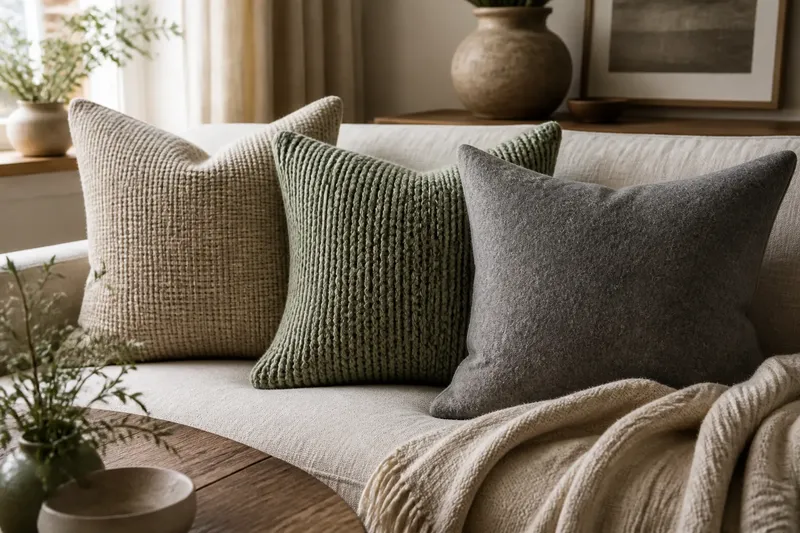
Woven, knitted or felted textiles can make the same cushion feel crisp, relaxed or quietly plush. If you are choosing a throw or a decorative cover, start by noticing how its surface is built: that structure affects its texture, drape and the way it sits alongside the objects already in your room.
These three labels describe different ways fibres form a cloth, not a ranking from refined to casual. A close look at the surface, followed by a gentle touch, can help you choose a fabric whose character suits the job.
1. What does a woven surface bring?
A woven textile is made by crossing two sets of threads: the lengthwise warp and the crosswise weft. On a plain weave, the threads pass over and under each other in a regular pattern. Twills, including the familiar diagonal ridges of denim, arrange those crossings differently; a basket weave groups them into a more pronounced grid.
Look for a surface that holds its shape and shows a distinct pattern of crossings. A tightly woven cotton cushion cover may look neat and composed, while a looser linen weave can show small irregularities that give it a more relaxed appearance. The weave may be visible as a fine grid, a diagonal line or a subtle change in sheen.
Woven cloth often has less stretch across its surface than knitted fabric, although the fibre, weave and finishing all affect how it behaves. That relative firmness can help a cushion keep a defined outline. A woven throw may also lie in broad folds rather than gathering into soft, springy ridges.
For a decorative cushion, consider whether you want the cover to look crisp against a soft sofa or to echo a room’s existing woven materials, such as curtains or a rug. A smooth, close weave gives patterned prints a clear ground; a textured weave can add interest even in a quiet, solid colour.
Check the fabric in both directions. If the threads form a clear crossing and the cloth resists gentle stretching, it is likely woven, though blends and finishing can make identification less obvious.
2. Why does knitted cloth feel more yielding?
Knitted textiles are built from interlocking loops of yarn. The loops give the surface a linked, flexible quality: pull gently at an edge and you may see the stitches open or shift, then settle back. The face may show rows of small Vs, raised ribs, cables or other stitch patterns.
That looped construction often makes knitted cloth feel more yielding than a comparable woven fabric. A cotton jersey can feel smooth and familiar, while a chunky wool knit brings visible depth and a relaxed, hand-worked character. Ribbing can create stronger ridges, and larger stitches make the structure especially easy to see.
On a throw, this flexibility can create generous folds and a soft, informal silhouette. On a cushion, it may make the cover look relaxed rather than sharply tailored. A knit can also stretch around a plump insert, so consider whether you like the resulting shape and whether the cover’s edges are finished to suit that movement.
Knitted surfaces vary considerably. A fine, tightly made knit may appear smooth and understated; a loose stitch can look airy and tactile. Pay attention to snag-prone loops if the textile will sit where jewellery, pet claws or rough furniture edges might catch it.
Try a gentle sideways stretch rather than tugging at a seam. A knitted surface tends to reveal its linked loops and give more readily, but the exact response depends on yarn, stitch and construction.
3. How does felt differ from woven and knitted cloth?
Felt is formed when fibres mat together rather than being arranged as crossing threads or interlocking loops. The surface may look dense and even, or retain a softly fuzzy finish. Wool felt is a familiar example, while other fibres and manufacturing methods can produce different textures.
Because felt has no obvious woven grid or rows of stitches, its face can appear calm and almost uninterrupted. That makes it useful when you want colour and material to make the impression, rather than a repeated pattern. A felted cushion can look clean-edged and sculptural; a felted throw may have a compact, substantial drape rather than the spring of a loose knit.
Run your fingers lightly across the surface. Felt may feel dense, soft, brushed or slightly firm, depending on how it was made and finished. It can also have an appealingly simple edge, though the way a particular piece has been cut and sewn will affect its finished look.
Felted cloth is not automatically rigid, nor is every felt surface smooth. A soft, thin felt and a thick, firmly made one can behave quite differently. Look at the cloth as well as its label, and consider whether its weight and texture suit a cushion cover, a folded throw or a smaller accent.
Choose felt when you want a surface with visual quiet and a clear, matte presence, rather than the obvious crossing of a weave or the loops of a knit.
4. Which textile surface suits a cushion or throw?
Begin with the shape and mood you want. Woven cloth tends to read as structured; knitted cloth often reads as supple and relaxed; felt can look dense and uninterrupted. These are useful starting points, not rules: fibre content, thickness, finish and construction can change the character of any of them.
- For a crisp cushion: consider a close weave if you want the cover to keep a defined outline and provide a steady ground for a print.
- For a relaxed cushion: look at a knit if you like visible stitches, gentle stretch and a less tailored appearance.
- For a simple colour statement: consider felt when you want a relatively uninterrupted surface that lets the shade and texture stand out.
- For a draped throw: compare how each fabric folds in your hands; a knit may gather into soft ridges, while a woven or felted cloth can fall in a different, more settled way.
- For a layered arrangement: contrast structures rather than piling on similar textures, such as pairing a smooth weave with a more open knit.
Imagine you have a plain sofa and want one cushion that feels relaxed without adding another busy pattern. You choose a solid-colour knitted cover with a clearly visible but close stitch, then place it beside a smoother woven cushion. The expected result is a noticeable contrast in surface while the shared simplicity of the colours keeps the pair visually connected.
Before choosing, ask what the textile will touch and how it will be used. A throw that is handled often may benefit from a surface you enjoy against your hands, while a decorative cushion can be chosen primarily for its outline and visual texture. If the piece must meet particular care or use requirements, follow its label and the maker’s instructions.
5. What should you notice when you compare fabrics?
A product photograph can hide the difference between a fine weave and a smooth knit, so use more than one clue when possible. Look for crossings, loops or a matted face, then consider how the cloth bends, stretches and catches light.
- Inspect the face: search for over-under crossings, repeated stitches or fibres that appear bonded into a continuous surface.
- Check the reverse: a fabric’s back may make its weave or stitch pattern clearer than the finished front.
- Notice the edge: a cut edge may reveal threads, loops or a compact felted body; finished seams can conceal these clues.
- Feel for movement: gently fold the fabric and see whether it springs, hangs in a broad fold or keeps a compact shape.
- Watch the light: a smooth surface may reflect light more evenly, while raised loops, ridges and fibres create more visible variation.
- Consider the nearby materials: compare the textile with the sofa, wood, painted surfaces or other cushions it will sit beside.
No single touch test can identify every fabric. A blended textile may combine structures or have a finish that changes how it feels, so treat the label as useful information and the visible surface as part of the decision.
What do shoppers ask about woven, knitted or felted textiles?
Can a textile combine more than one structure?
Yes. A fabric may include different yarns, surface treatments or constructions, and a finished cushion can combine a woven front with another material elsewhere. Read the product description and inspect each visible panel rather than assuming the whole item has one structure.
Is knitted fabric always softer than woven fabric?
No. A dense knit can feel firm, while a loose or brushed woven cloth may feel soft. Fibre, yarn thickness and finishing all shape the hand, so compare the actual surface instead of relying on the structure name alone.
Does felt always have a fuzzy surface?
No. Some felted cloth has a soft nap, while other pieces look smooth, dense or finely textured. The fibres and finishing determine whether the surface feels plush, compact or somewhere between.
Which structure is easiest to live with?
That depends on where the item will sit, how it will be handled and how it should be cared for. Check the care label and consider whether a smooth, looped or felted surface fits the household’s everyday use.
How can you make the final choice?
Match the structure to the feeling you want the object to bring: the clarity of a weave, the yielding movement of a knit or the visual calm of felt. Then check its colour, scale and drape beside the furnishings around it, rather than judging the textile in isolation.
For anyone comparing woven, knitted or felted textiles, the most useful question is not which structure is best, but which surface earns its place in the room. A small difference in texture can make a cushion look more tailored, a throw feel more inviting or a quiet corner feel more considered.