The Keepsake Box Before the Memory Album
A keepsake box can turn scattered mementos into a collection you can revisit. Choose what belongs, protect fragile pieces and keep the story clear.
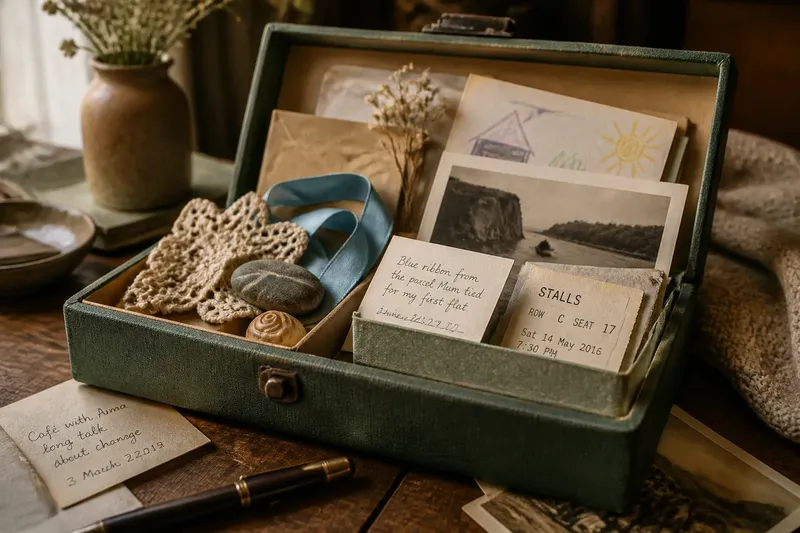
A keepsake box is often where a theatre ticket, a child’s paper drawing and a smooth pebble end up when nobody wants to throw them away. The trouble starts when the box fills, the objects lose their context or a careful attempt to preserve memories makes them feel strangely untouchable. Before a memory album arranges the story, a box lets it gather in its own uneven way.
That loose form is useful, but it needs a little attention. Most problems come from unclear choices: what counts as worth keeping, how objects sit together, and whether anyone will remember why a particular scrap mattered. A few modest adjustments can make a keepsake box easier to use without turning it into a museum cabinet.
Why does the box fill with things that no longer mean much?
A box can become a holding place for decisions postponed. Receipts, packaging and notes slip in beside genuine mementos because they all arrived during a memorable day. Later, the connection may be difficult to recognise.
Instead of asking whether an object is important in some grand sense, ask what it brings back and whether that association is yours to keep. A ticket might recall the companion who came along; a plain button could be the only surviving piece from a coat worn by someone close. The object’s price or appearance is not the point.
Say you have kept a café receipt from a day spent with a friend. If you can still describe the conversation or why that meeting mattered, the paper may have a place. If it is only one of many similar receipts and carries no distinct memory, you could keep a note about the occasion instead, or let the paper go.
Try a small sorting area beside the box, with three groups: keep, decide later and release. The “decide later” group should be a temporary pause, not a second permanent collection; revisit it when the immediate feeling around an object has softened.
What if a keepsake has lost its story?
Unlabelled objects can become puzzles. A dried flower, a key or a folded scrap of paper may look self-explanatory at the time, but its meaning can fade as people move house, routines change and family members who knew the story are no longer nearby.
Add a short note in plain language. Include who or what the object relates to, the occasion if you remember it, and one detail that makes the memory yours. “Blue ribbon” identifies a thing; “Blue ribbon from the parcel Mum tied for my first flat” gives it a thread of meaning.
Write on a separate archival-quality paper slip with a pencil or an appropriate pen, rather than directly on a delicate object. Keep the note beside the item, not beneath a stack where it can drift away. For an object whose story is uncertain, say so: a question mark is more honest than a confident guess.
If several objects belong to one event, a single note can describe the group. That keeps the box from filling with repeated explanations while making the connection legible to someone who did not live the moment.
How can fragile things share a box without being damaged?
A keepsake box often puts unlike materials together: paper beside metal, cloth beside a shell, or a photograph under something with a rough edge. The issue is not merely that the objects look untidy. Pressure, friction, light, moisture and unsuitable storage materials can all affect delicate pieces over time.
Use small envelopes, paper folders or separate compartments to stop items rubbing against each other. Avoid forcing a box shut over bulky objects, and do not fold a photograph or brittle paper to make it fit. A stable, dry cupboard away from direct sunlight is generally a kinder place than a damp basement, a hot loft or a sunny windowsill.
For a valuable, unusually fragile or historically significant item, ask a conservator or another qualified collections professional about suitable storage. Materials and maker’s instructions can affect what is appropriate, so check them when relevant.
- Keep photographs apart from objects that may scratch or press against them.
- Use acid-free paper or folders for vulnerable paper keepsakes where suitable.
- Let a damp or freshly gathered natural object dry safely before storing it with paper.
- Leave enough room to lift items out without bending or pulling them.
- Check the box occasionally for signs of damp, pests or material deterioration.
Think of the box as a small home for objects, not a container to pack to the brim.
Why does a carefully arranged box feel too formal to open?
It can happen when the collection is sorted so tightly that every item seems to need a proper place, a label and a reason for remaining. A box that began as an easy landing spot then feels like an archive that must be maintained correctly.
Keep the arrangement simple enough to disturb. You might group paper keepsakes together and place small objects in a shallow tray, leaving a little open space for a new item. The goal is not a perfect display; it is a collection you can revisit without undoing hours of work.
When the objects span different parts of life, loose groupings can help: “people”, “places”, “making” or “ordinary days”. Choose categories that make sense to you rather than imposing a tidy chronology. A birthday card and a grocery list from a memorable week need not be separated simply because one looks more significant.
If a box feels precious enough that nobody dares touch it, take out a few things and place them somewhere they can be enjoyed. The collection should support remembrance, not make every encounter feel like a conservation task.
What questions help decide what belongs in a keepsake box?
Should I keep every card or letter?
Keep the ones that carry a voice, relationship or moment you want to revisit, rather than treating every message as equally essential. If several cards say similar things, choose one or keep a note about the rest.
Can I keep digital memories with physical objects?
Yes, but give the link a clear form: a printed photograph, a written note describing a recording, or a small card with the file’s location. A loose device or an unexplained code is unlikely to tell a future reader what the memory means.
What should I do with keepsakes that belong to someone else?
Ask the person or family members where possible, especially if the object carries a shared or sensitive story. If ownership is unclear, keep it separate while you find out rather than silently absorbing it into your own collection.
When is a box no longer the right container?
If objects are being crushed, exposed to unsuitable conditions or forgotten because the box is hard to access, change the storage arrangement. A small drawer, a document case or separate containers for different materials may serve the collection better.
How do you make room without turning sorting into a purge?
A full box does not mean that every object must be judged again in one sitting. Work with one small group, such as paper from a single trip, and notice what repeats, what still carries a story and what has become difficult to identify.
When several objects recall the same event, keep the ones with different kinds of meaning: perhaps a handwritten note for the voice, a photograph for the people and a tiny found object for the place. If the collection has many near-duplicates, choose the strongest representative and write down what the others were, if that detail matters.
Some things deserve to be remembered without being stored. You can photograph a bulky craft project or make a brief note about a worn-out everyday object before letting it go. That is not a lesser form of care; it recognises that the memory and its original container are not always the same thing.
For a keepsake box, the most useful rule is to keep the object only when you can give it a place, a condition it can tolerate and enough context to be understood. Leave a little room for the next ordinary thing that becomes unexpectedly dear.