A Gentle Autumn Reset for the Front Hall
A gentle autumn reset for the front hall makes space for damp coats, muddy shoes and daily essentials by giving each a useful place to land.
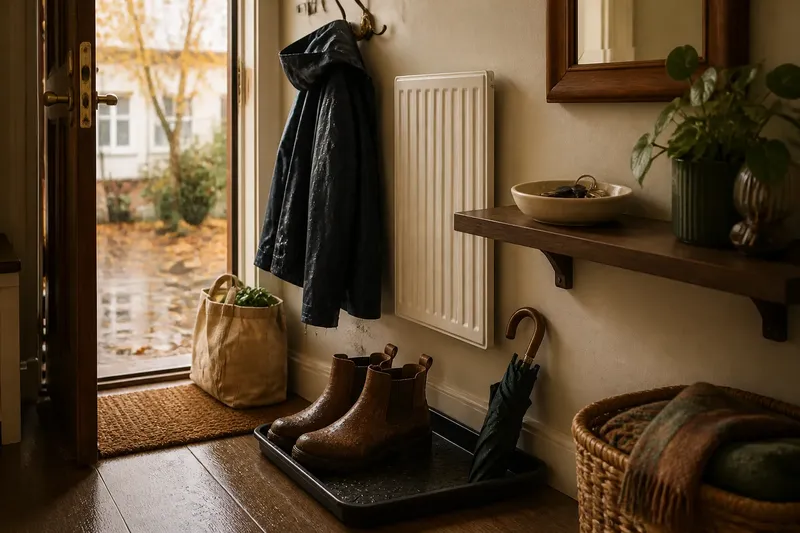
By late autumn, the front hall may be holding a wet umbrella, a tote bag, yesterday’s trainers and a coat that never quite made it to its hook. A gentle autumn reset for the front hall starts by noticing what the space is actually asked to hold, then making a few deliberate landing places for the season ahead.
Imagine Jo, in a small rented flat with a narrow entrance, a radiator and a cupboard that is already full. Their summer sandals are still beside the door, while a damp raincoat hangs over a chair. The aim is not to decorate the hall or buy a matching storage set; it is to make arriving home feel less like a game of catch-up.
What is the hall holding at the moment?
Jo begins with an ordinary evening’s worth of belongings. They notice that the front door opens towards a pair of shoes, the shopping bag lands on the floor, and keys tend to travel from a coat pocket to the kitchen. The hall is not short of effort. It lacks a few clear places for things that recur.
For a short while, Jo watches what comes in and goes out: coats, shoes, post, keys, bags and the umbrella. This is not a demand to catalogue every object. It is a way to distinguish daily arrivals from things that are merely passing through or have been left behind.
They move the sandals into a cupboard, put the dry shopping bag with the reusable bags, and carry a pile of old post to the recycling. The floor immediately becomes easier to use, but the useful discovery is that the coat and shoes need different treatment: the coat needs to dry, while the shoes need to be contained.
Where should the everyday things land?
In Jo’s narrow hall, adding a bulky bench would make the entrance harder to pass through. Instead, they choose three modest landing places: a sturdy hook for the everyday coat, a washable tray for shoes, and a small dish on a shelf for keys. Each has a job, and none asks the door area to do everything.
The hook is placed where the coat can hang without covering the radiator or catching on the door. The shoe tray sits against the wall, not in the route from the door to the rest of the flat. The key dish goes on the existing shelf, beside the place where Jo already pauses to take off their shoes.
That last choice matters more than having a beautiful container. A landing place works best when it is close to the moment an item leaves someone’s hand. If keys usually come out at the kitchen end of the hall, a dish near the front door may not become part of the routine.
How should coats and footwear change with the season?
Jo brings the autumn coat and everyday boots forward, then stores the light jacket and sandals elsewhere. They keep only the footwear used often near the door; occasional pairs can stay in the cupboard. This frees the tray from becoming a general holding zone for every shoe in the household.
The raincoat needs air rather than a crowded hook among dry garments. Jo gives it its own hook with a little space around it and leaves the umbrella open to dry in a safe, out-of-the-way spot after use. A washable mat catches drips and grit, while a cloth nearby makes a quick clean-up easy.
Because Jo rents, they avoid drilling into the wall and use the existing hooks and shelf. If a new fixture or care method depends on a surface, product label or landlord’s permission, check the relevant instructions or agreement before making a change.
Which small hall choices are worth thinking through?
What belongs in the front hall each day?
Keep the everyday coat, frequently worn shoes, keys and current bag within easy reach. Seasonal extras and objects with no regular role can live elsewhere, so the entrance remains useful rather than becoming a storage overflow.
How can a small hall handle wet shoes?
A washable, stable tray gives damp soles a defined place and keeps grit from spreading across the floor. Leave room for air around wet footwear, and choose a location that does not obstruct the doorway or a clear walking route.
Should bags and post share one landing place?
They can share a surface if each has enough room and the post is dealt with regularly. If bags bury letters or letters slide onto the floor, give them separate spots or move one of them to a nearby shelf.
What if there is no room for more furniture?
Use the vertical space already available: a suitable hook, an existing shelf or the inside of a cupboard can serve without adding a bulky unit. Keep the floor clear enough for opening the door and moving through comfortably.
What does the reset look like in daily use?
On the first rainy evening after the change, Jo comes in carrying a grocery bag and wearing the damp coat. The bag goes on its usual shelf, the coat goes on its separate hook, and the boots sit on the tray. The keys still go in the dish, because Jo has placed it where they naturally stop.
The expected observable result is modest: fewer items collect in the doorway, wet footwear has a contained spot, and the coat is no longer draped over a chair. If the bag repeatedly lands elsewhere, Jo can move its landing place to match that habit instead of blaming the person carrying it.
A week later, the tray has gathered grit and needs a quick clean; the shelf has acquired a leaflet that does not belong there. These are useful signs, not evidence that the arrangement has failed. A front hall is a working threshold, so a small reset may include clearing its surfaces as well as choosing them.
How can the arrangement stay gentle?
Jo keeps the routine light: return the keys to the dish, hang the coat where it can dry, and clear the tray when it starts to crowd. They do not add a container for every object or expect the hall to hold possessions that would be better stored in another room.
For your own gentle autumn reset for the front hall, notice what arrives repeatedly, assign a few landing places near the actions that already happen, and leave enough clear space to enter and leave comfortably. The most useful seasonal change may be a single hook moved into reach or a pair of shoes put away before the next wet day.